
To Pursue or Not Pursue: How to Evaluate PR Opportunities

By Matt Burkey
We often view media coverage as the ultimate gauge of PR success. It’s what gives us that rush of excitement when an article, segment, or podcast goes live.
But not all opportunities are worth pursuing. A sign of a great PR pro is knowing how to choose media opportunities to pursue and which to let pass by. Quality, after all, is just as important as quantity.
Whether you’re making an announcement, trendjacking a moment in the news, or crafting your own story, deciding when to pursue a PR opportunity is a bit of an art and a science. There are nuances based on whether you’re proactively deciding whether to chase an opportunity or if it comes to you reactively.
Let’s start with the proactive part.
Initial Evaluation: Tiering Your Media List
One of the questions almost any PR pro asks when they start a new engagement is, “When you think of your dream story or headline, what is it about, and where would it run?” While The New York Times and The Wall Street Journal often top the dream hit list, the size of an outlet’s readership doesn’t always mean it should be your number one target.
We created the Carve Scoring System (CSS) to help us evaluate coverage based on a set of factors including influence, tone, and executive visibility.It really isn’t all about the size of the outlet. We also use it to tier outlets when we first kick off with a new partner.
These are the questions we ask before opportunities even exist:
Does this outlet actually reach the audience that matters to the business? Decision-makers, buyers, partners, consumers, or investors we’re trying to influence.
What kind of stories does this outlet elevate and do we fit naturally into them? Forcing a fit is usually a losing game.
Who else are they covering? We like to use both a practical and an ambitious lens with this. Even if our client isn’t traditionally “big enough,” is this an outlet we should be growing into?
Will the coverage travel? Does it get syndicated, shared, cited, or shape broader conversation beyond the initial hit?
Once we’ve categorized media into three distinct tiers, we have solid guardrails to guide execution. But when you have a live story angle, the stakes get higher.
Proactive PR Opportunity Evaluation
Once you have a real story to tell, the question shifts from “where do we want to show up?” to “who is the right reporter to bring this story to market?”
At this stage, you’re making deliberate decisions on who is best positioned to storytell. The wrong reporter can flatten a strong story. The right one can elevate it. Before you pitch, consider these things:
How big is this story (objectively) and whose audience would care? Is this a broad-market moment, or something better suited for a niche audience that will be more engaged and informed? Our team partnered with hospitality company Mint House. For new property-related news, we would regularly work with trade publications such as Hotel Dive because we knew they’d reach the desired audience of investors and industry executives.
Conversely, when there was the potential to tell a broader story around how the short-term rental industry was shifting, we identified a reporter at Business Insiderwho told “think piece” real estate stories. She interviewed the company’s CEO. These are two fundamentally different stories aimed at different audiences, and it’s important to understand when and how to identify each.
Who is the best storyteller for this specific angle? It’s one thing to know a journalist covers a particular beat, it’s another to understand how they cover it. The difference between those can be everything.
It’s great when a journalist covers the facts of your announcement. But finding that reporter who is willing to work with you to wrap your announcement around a broader trend elevates the storytelling.
PRO TIP: We’ve helped many clients wrap announcements around broader trends like seasonal moments. We gathered our takeaways from those PR moments, and tips for how to design your own, in this article.
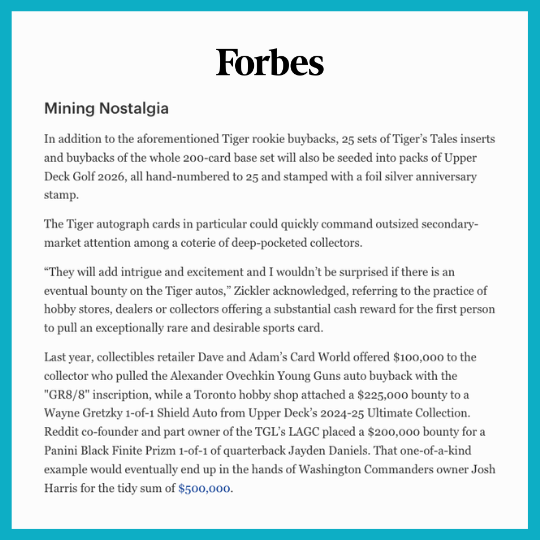
When collectibles company Upper Deck launched a set of golf trading cards, including the opportunity to find signed copies of Tiger Woods’ “rookie card,” the announcement itself was strong. But we knew one specific Forbes reporter whose expertise in golf and sports business – and track record of narrative-driven coverage – made him the right fit to tell the story in a bigger way.
We had also worked with the reporter before, so we understood how he approached similar stories and were confident he would deliver. Pursuing this opportunity was an obvious yes.

Do we need visuals to best communicate this story? A picture is worth a thousand words. Depending on your news, it might be worth even more.
That was the case for Atlanta’s iconic Antico Pizza Napoletana. We helped launch their frozen pizzas in Costco stores throughout the Southeast U.S. But we knew it was more than a distribution story. It was about translating a well-known, in-person dining experience into a new format.
Targeting USA Today’s 10Best, a lifestyle and travel magazine, ensured the story would fully leverage strong visuals along with the news (and even a great interview). When an outlet is known to prioritize imagery – and you have the assets to support it – it can significantly increase the impact of the coverage.


Inbound Opps: How to Choose Media Opportunities That Come to You
Securing a media opportunity because you have the right pitch to the right reporter at the right time will never get old. But when you’ve established a company or executive as a credible source the media can rely on, a magical thing happens: the media begin reaching out to you!
We call this “media breeds media.” It’s the compounding effect of coverage. One story leads to another, like when Jimmy Kimmel included our client in his monologue because of a segment we secured on KTLA.
It’s a great position to be in but it also forces you to be discerning to protect your spokesperson’s time, your brand credibility, or something else. If the outlet was on your initial media list, it means that you’re already likely leaning yes. But there are other things to consider when vetting media opportunities:
Do you have an existing relationship with this reporter? If a reporter I’ve worked with numerous times reaches out, I’m going to take their inbound opp seriously, and help in any way I can.
I’ve worked with freelancer Jeff Morris for several years and he has always been fantastic to work with. I trust when he reaches out I can help him with what he needs; he’ll give me a rundown of what he’s working on so there’s no surprises.
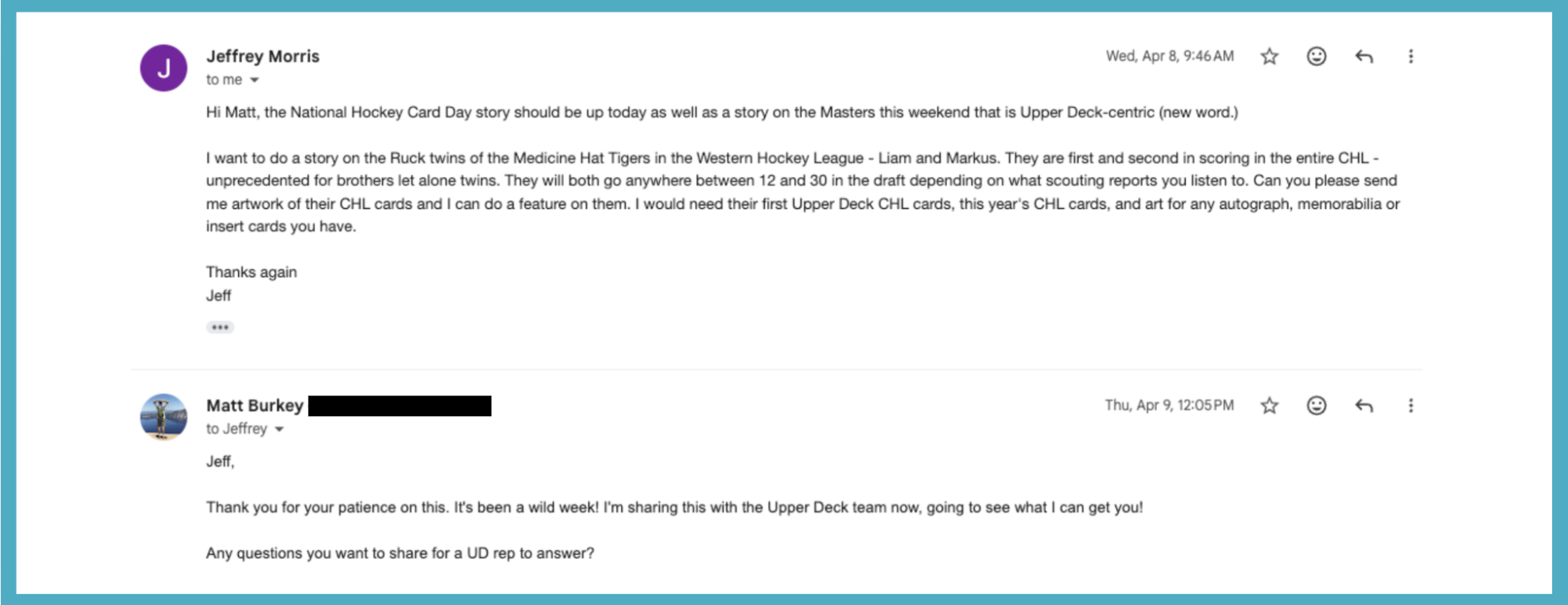
Has the journalist clearly done their research? If media reach out with an opportunity and they call out specifics (like an executive’s LinkedIn post or a recent company announcement) it shows they know who they are reaching out to and that your company or executive can add to the conversation. Does it mean you give it the automatic green light? Maybe not, but it does mean that some further digging should be done.
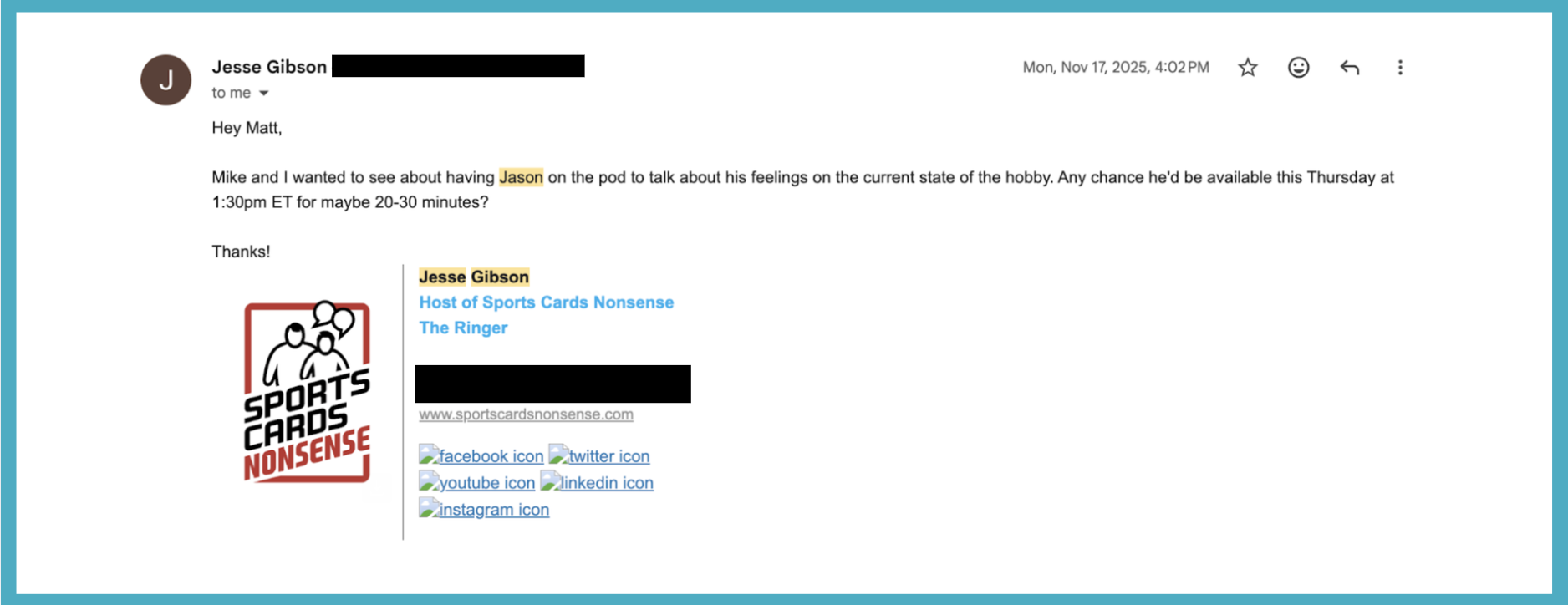
Will we matter in this story? Having a client quote or product mention in an article isn’t a bad thing, but when they are a primary focus, that makes it even better! When the Sports Card Nonsense podcast reached out we knew that it would be a high-visibility opportunity for our client because we’d worked with them several times in the past. Not only was the executive going to be able to hit key business messages, but also showcase their knowledge on the collectibles industry as a whole. This made it a no-brainer for us to pursue as soon as the opportunity came in.
Could the opportunity build a worthwhile relationship? Sometimes an inbound opportunity comes from a journalist who has been on your media list for a long time, but the topic they’ve reached out about isn’t related to what you’ve sent them. While you still need to do due diligence, these are invaluable opportunities to build trust and relationships by helping a reporter when they have an ask. The next time your pitch pops up in their inbox, you may just get extra consideration you weren’t getting previously.
That’s Gonna Be a No From Me, Dawg
For every “yes” to an inbound, there’s bound to be three “no”s.
When vetting media opportunities, some indicators that an inbound you’ve received is not worth the effort:
Requests for sensitive information or an off-message story topic: These opportunities can come from everyone, from trade outlets to small blogs or even top-tier publications (those hurt the most). Most companies have information they absolutely will not share publicly like financials or internal strategy, and when these are driving the requests, turn it down.
PRO TIP: We’ve all worked with brands that avoid controversial topics at all costs. And many times that’s the right move. But sometimes they’re worth considering. Work with your partners up front to decide where you’re willing to speak out and what is a hard no. Maybe you avoid most politically charged commentary unless you’re speaking on behalf of core customers, for example.
Broad stroke emails: I’ve received emails asking to profile a company or executive when it’s clear the company and/or executive’s name has been swapped out, and that same email has been reused for a variety of companies. Steer clear.
“The interview is free”:Anytime a media opportunity hits my inbox, and the sender calls out that an interview with an executive is “free,” it sends off a red flag. Most journalists operate on the understanding that editorial coverage is free, so when someone feels the need to point it out, it makes you wonder why.
Outlet has no presence on media monitoring services: There are a variety of tools at anyone’s disposal to vet a journalist or outlet. If you don’t immediately recognize either, head to those tools. While LinkedIn is always a great option, if an outlet doesn’t show up on tools like Muck Rack, or stories from that outlet are few and far between, be skeptical of moving forward.
Pay per placement or guarantees: Some inbounds promise placements in prominent top-tier outlets. Some will even claim that “you only pay when the placement lands.” Run! “Guaranteed” is a taboo word in PR, and anyone (other than a journalist directly tied to the outlet) who is making these promises should be approached with extreme caution.
If you’re doing your job and racking up the media opportunities, remember that not all are created equal. Knowing which outlets’ reporters to target proactively and how to choose media opportunities from inbound inquiries keeps your strategy focused and messaging consistent.